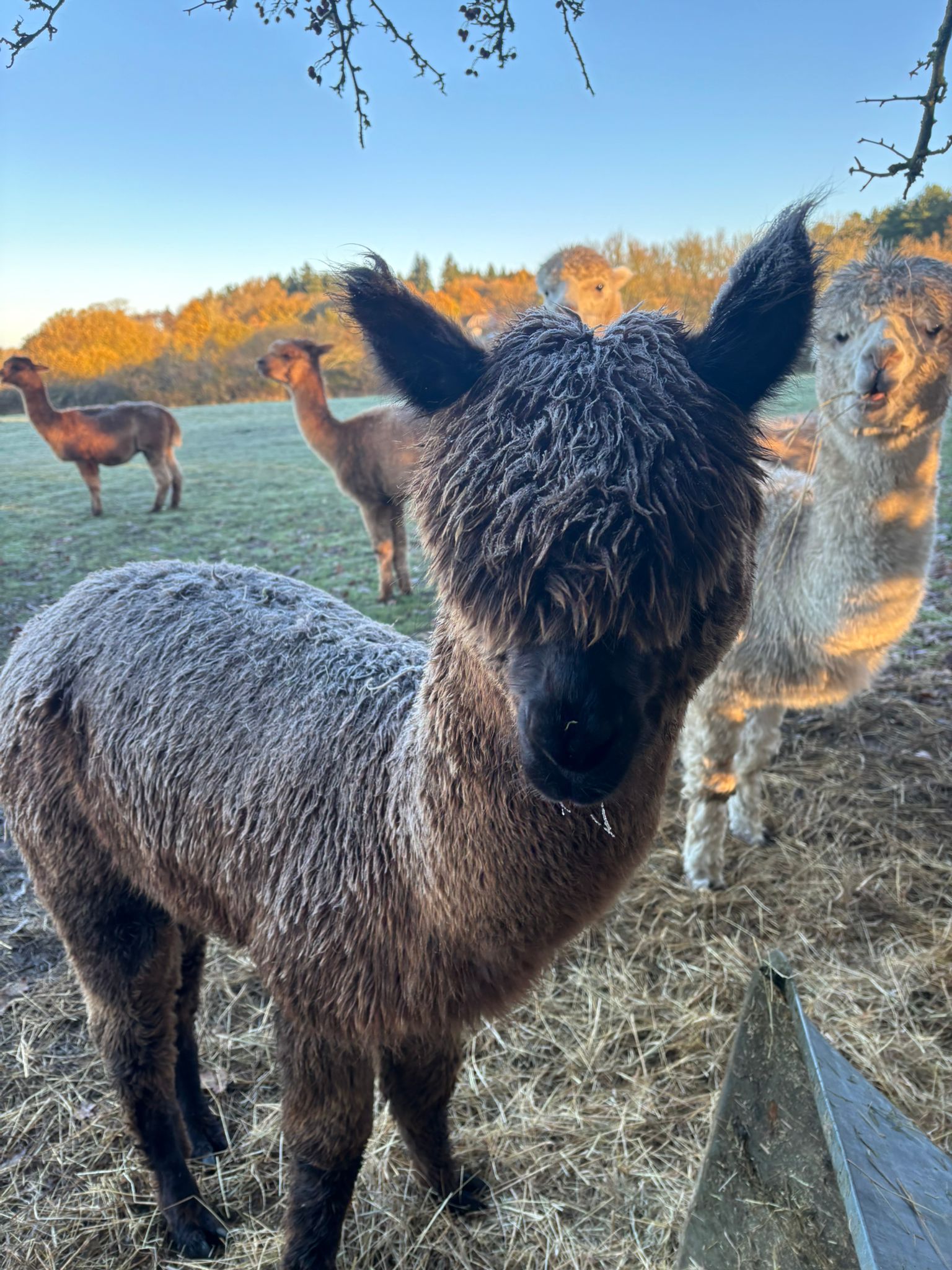
The Traits That Define a Quality Fleece
Fineness, uniformity, density, length, lustre and freedom from coarse fibre are what every judge and buyer looks for. They matter for both huacaya and suri, even though the two fleeces look completely different.
Fineness (micron)
The single biggest driver of value. Measured in microns, the width of one fibre. The finer the fibre, the softer the handle and the higher the price. Alpaca ranges from roughly 12 to 40 microns.
Uniformity of micron
How even the fineness is across the whole fleece and along each fibre. A fine fleece that is also consistent is worth far more than a fine-but-variable one. This is where the SD and CV numbers come in.
Density
How many fibres grow per square area of skin. A dense fleece yields more fibre and, generally, indicates good follicle development. Assessed by handle and by parting the fleece to see how tightly it grows.
Staple length
The length of a lock of fibre for a year's growth. Needs to be long enough to process, but sound and consistent. Very long or very short both bring problems.
Character & style
In huacaya, this is crimp, the regular wave through the staple. Well-defined crimp is associated with fineness and density beneath the skin, and it is highly heritable. In suri, it is lock structure and how the fibre hangs.
Lustre / brightness
How the fibre reflects light. Suri is prized for a bright, silky sheen; huacaya for a clean brightness. Lustre signals a healthy, well-structured fibre.
Freedom from guard hair
Guard hair is coarse, straight fibre, usually over 30 microns, a throwback trait. Too much of it creates a prickly, scratchy handle and lowers the grade. Judges penalise it heavily.
Cleanliness & soundness
Free of vegetable matter, stains, breaks and matting. A fleece with tender breaks or heavy contamination is downgraded or disqualified however fine it is.
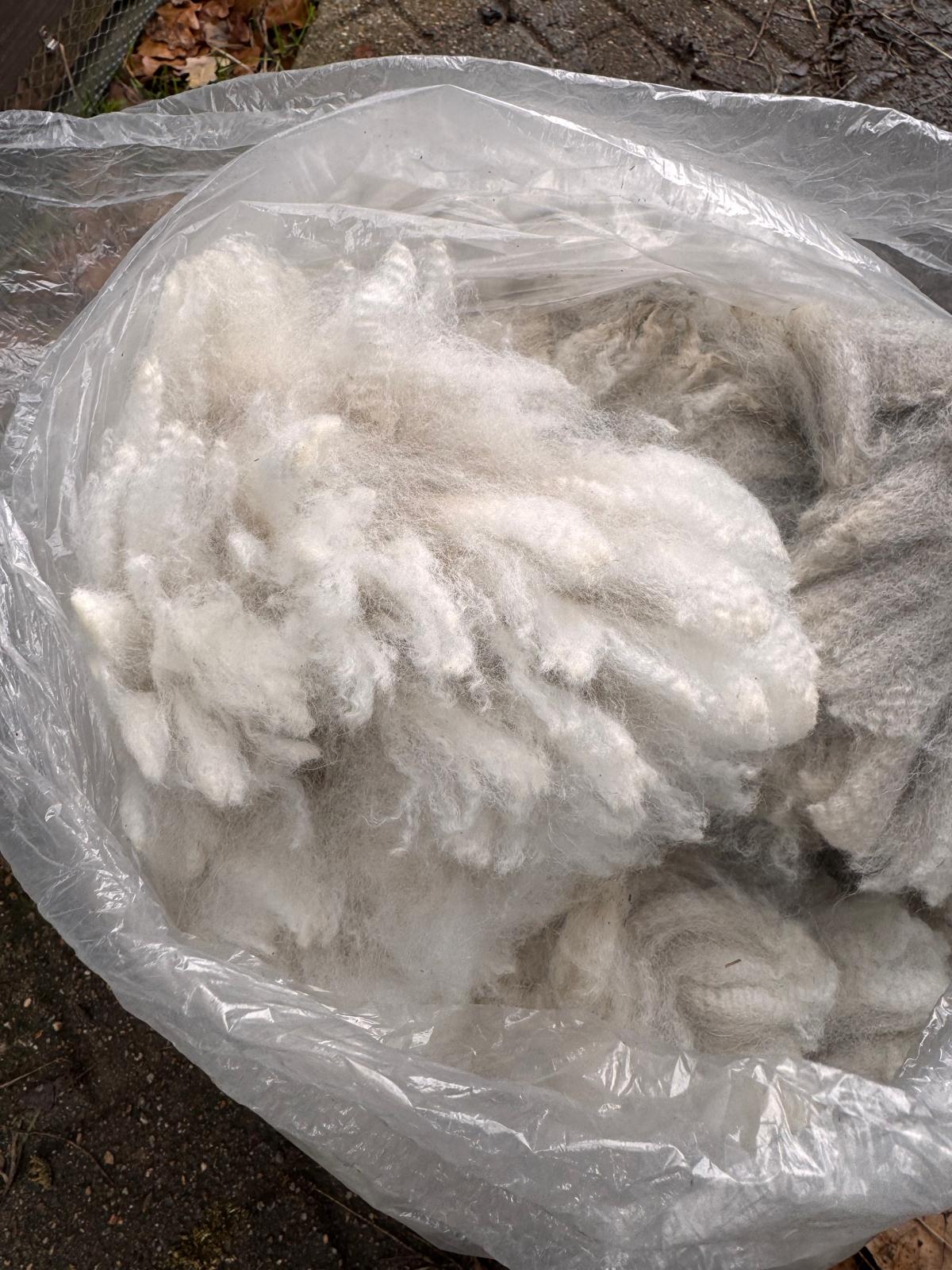
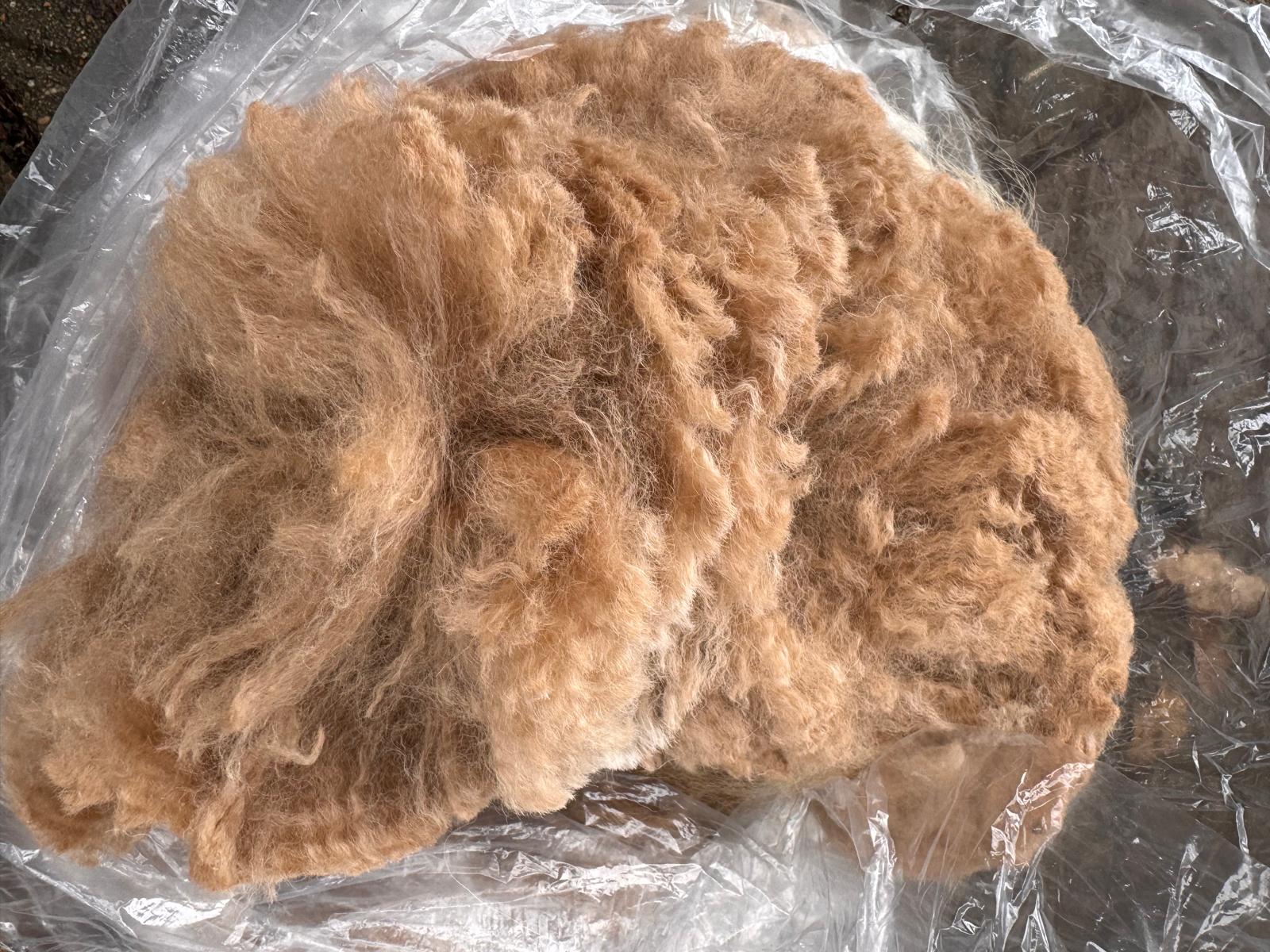
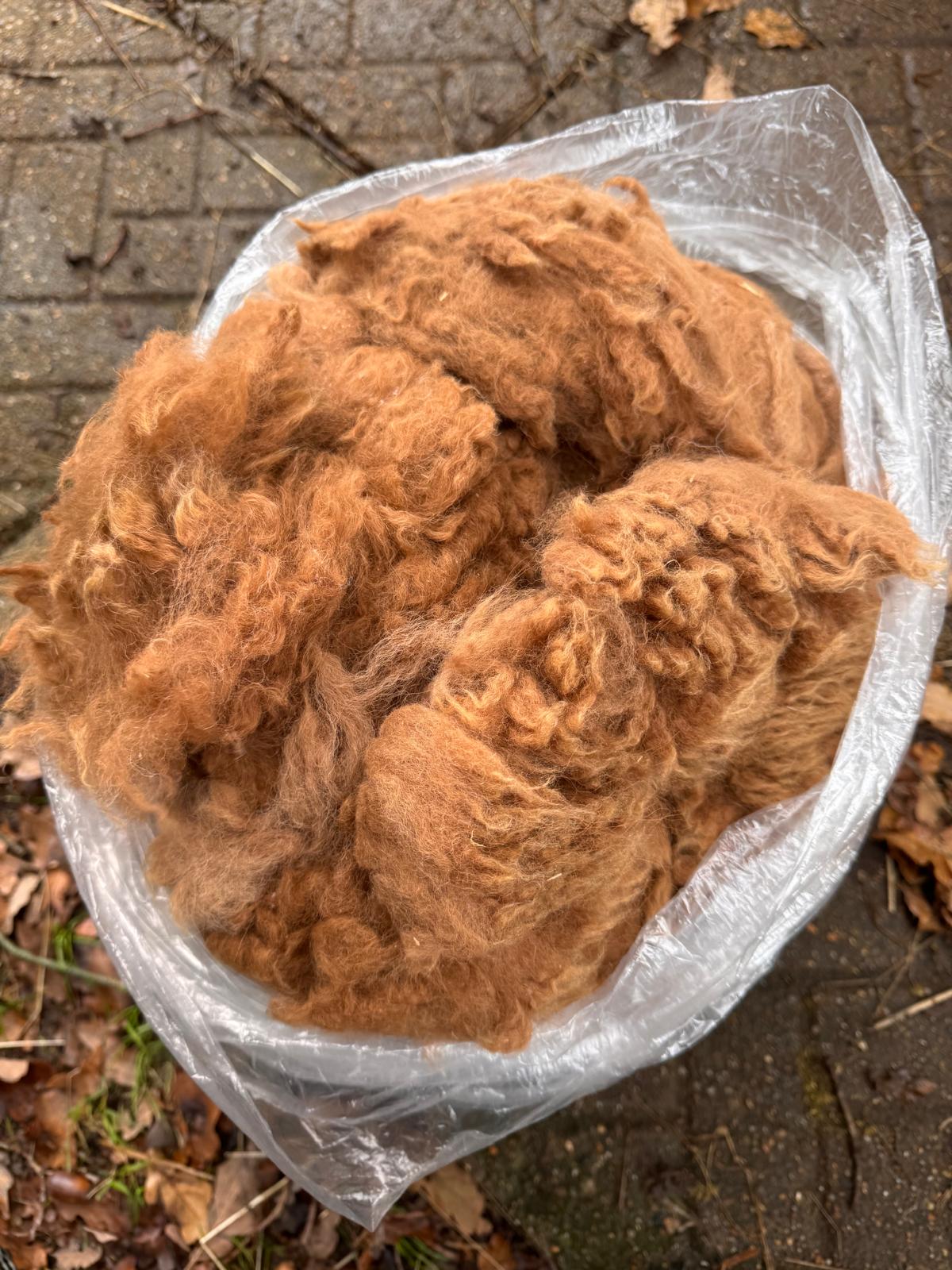
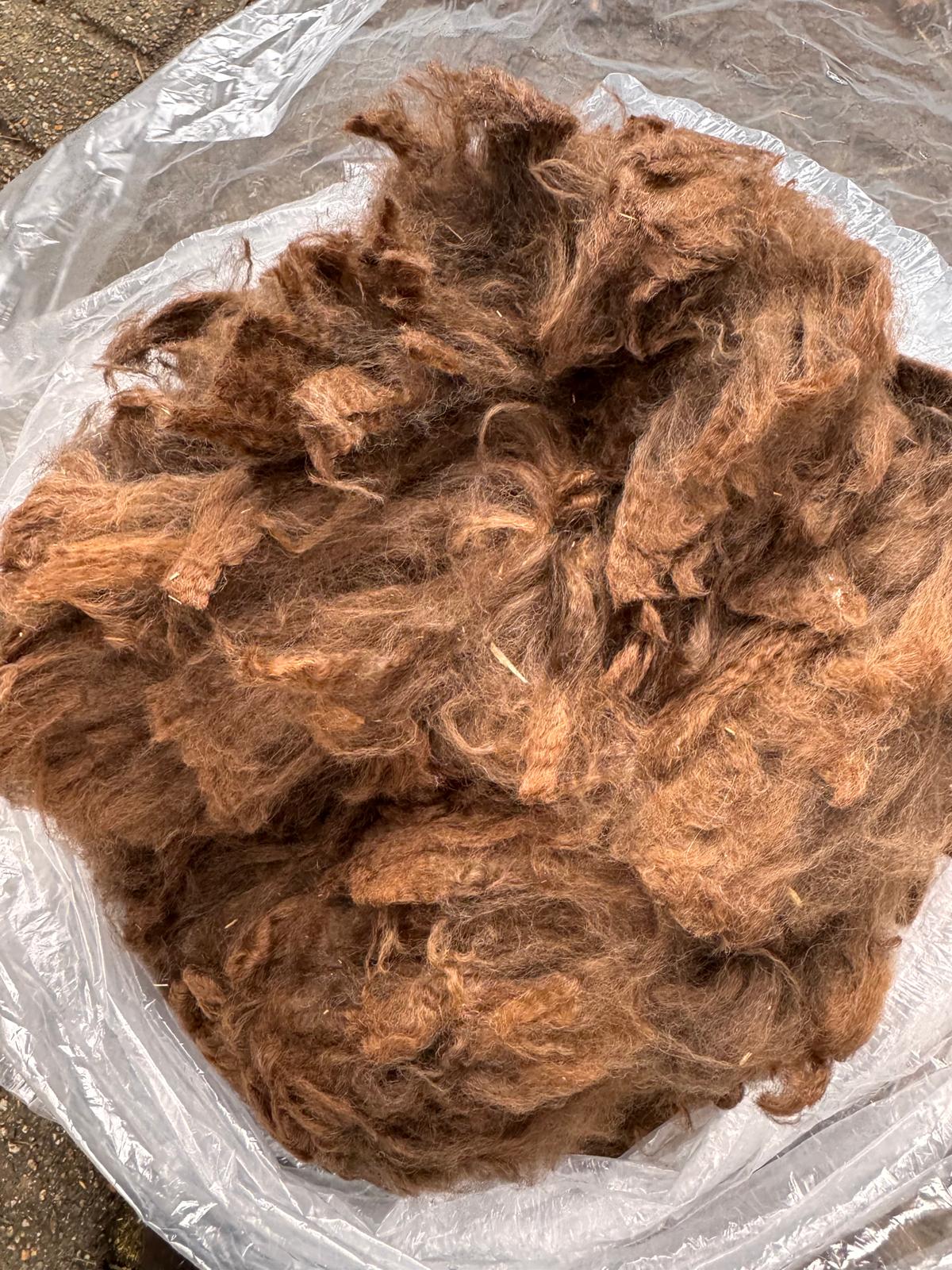
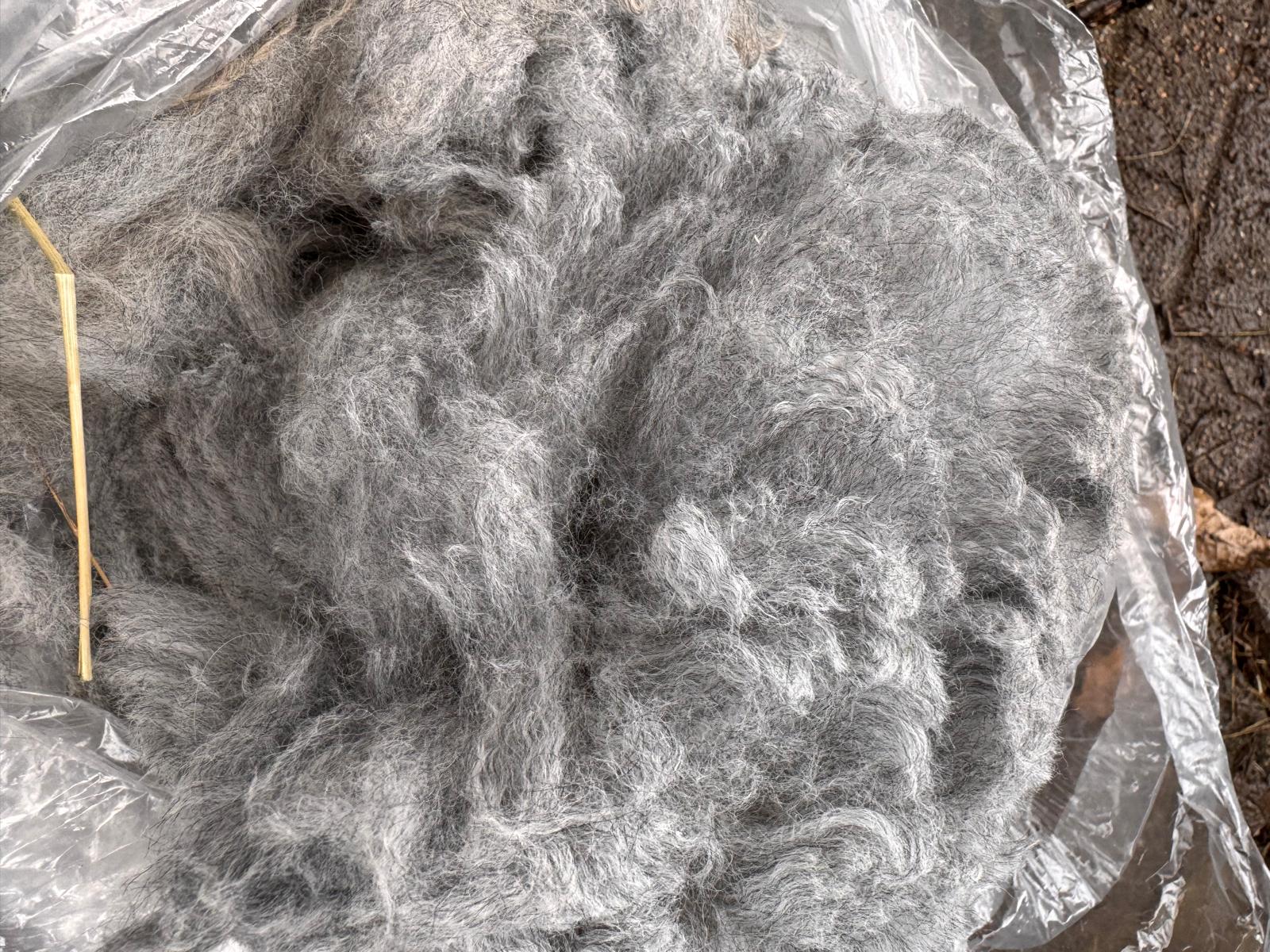
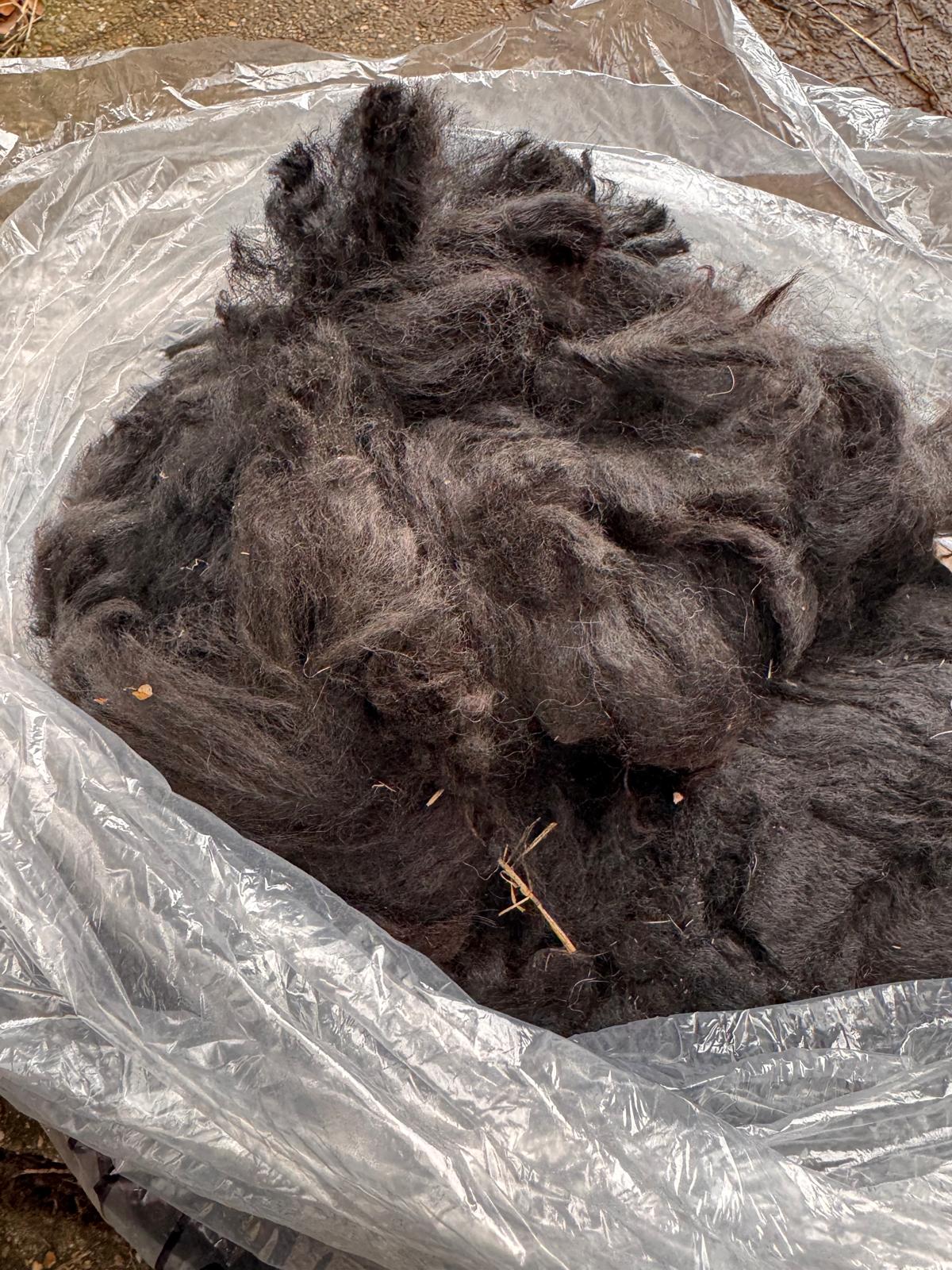
Real Hensting Fleece, Freshly Shorn
These are actual fleeces from our own herd, straight off the animal at shearing. Notice how colour, staple and crimp differ from one alpaca to the next, this is the raw material before any washing or processing.
Micron: Why Fineness Rules the Price
A micron is one millionth of a metre. Human hair is around 100 microns; alpaca is a fraction of that. In every commercial process it is largely fineness that sets the price, so this is the number breeders chase hardest. As a rough guide to how fleece is banded:
Bands are indicative. Every alpaca coarsens gradually with age, so a young animal's first fleece is usually its finest.
Reading a Fleece Test (the Histogram)
Send a mid-side sample to a fibre lab and you get back a histogram: an objective snapshot of the fleece at that moment. Here is what each figure actually tells you, in plain terms.
| Measurement | What it is | What to want |
|---|---|---|
| AFD / MFD | Average (mean) fibre diameter in microns, the headline fineness figure. | Lower is finer. Read alongside the animal's age. |
| SD | Standard deviation, the average spread of fibre diameters around the mean. | Lower means a more consistent, softer-handling fleece. |
| CV (CVD) | Coefficient of variation, the SD as a percentage of the AFD. A consistency score. | Lower is better. A CV in the low twenties is very consistent. |
| Comfort Factor | The percentage of fibres at or below 30 microns. | Higher is better. Fibres over 30 microns cause the prickle you feel next to skin. |
| % over 30µn; | The proportion of coarse fibres, the flip side of comfort factor. | Lower is better. |
| Curvature (CRV) | The degree of curve per unit length, closely tied to crimp frequency. | Higher curvature generally goes with finer, more crimpy fibre. |
| Spin Fineness | A calculated figure combining micron and CV to estimate spinning performance. | Lower indicates better spinning quality. |
| Staple length | Average length of the staple for the growth period. | Enough to process cleanly, and consistent across the fleece. |
One caution: a histogram usually comes from a single small sample, often a two-inch square from the mid-side. It is an excellent guide, but it represents one spot at one moment, which is exactly why judges also handle the whole fleece and why breeders test the same animal yearly to see the trend.
How a Fleece Is Judged at a Show
In the UK, fleece shows run under British Alpaca Society rules and are judged comparatively, one fleece against another, rather than to a fixed score. The judge works methodically through the same traits every time.
Each fleece is examined in a minimum of three places, the shoulder, the mid-side and the rump, so the judge sees how consistent the animal is from front to back. At each point they assess fineness and handle, uniformity of micron, staple length, uniformity of colour or pattern, character and style (crimp in huacaya, lock formation in suri), brightness or lustre, freedom from guard hair, and density.
Presentation counts before the judging even starts. Show fleeces must be skirted, all the short, stained and coarse edge fibre removed, along with vegetable matter, and displayed cut side out in a clear, unmarked bag. A poorly skirted fleece is penalised throughout. A fleece that is unsound, with tender breaks, matting or parasites, can be disqualified outright no matter how fine it is.
Judging always takes the animal's age into account: a four-year-old holding fine, well-defined fleece is a stronger result than the same figures in a first fleece, because maintaining quality as an alpaca matures is itself the prize.
Huacaya vs Suri Fleece
The desirable traits are the same for both, but they show up differently, so they are judged on their own terms.
Huacaya
- Grows outward from the body in staples, giving a soft, woolly, teddy-bear appearance
- Defined by crimp, the regular wave through the staple
- Well-structured crimp signals fineness and density beneath the skin
- Judged on brightness rather than high shine
- The great majority of the UK national herd
Suri
- Hangs down from the body in long, separate locks or ribbons
- Has little or no crimp; judged on lock structure and formation
- Prized above all for lustre, a bright, silky sheen
- Rarer and often higher value, but needs specialist knowledge to breed and assess
- Mainly used for woven cloth rather than knitwear
How Fleece Changes With Age
Every alpaca coarsens gradually as it ages, so its first fleece is typically its finest and the micron creeps up year on year. That is why a fleece test is only a snapshot, and why breeders test the same animal annually, usually up to about five years old, to track the trend rather than judge on a single figure.
The percentage of the fleece that is usable at top grade also shifts with age. This is why an older alpaca that holds its fineness and crimp is so valued, it has proven it can maintain quality, which is exactly what you want to pass to the next generation.
Alpacas do not shed and must be shorn every year. A UK alpaca will typically clip somewhere between 1.5 and 2.5 kg of fleece per year, and shearing time is the natural moment to take a sample and keep your records up to date.
See Fleece Up Close
Visit the herd to feel the difference between fine and coarse, huacaya and suri, and see how colour and crimp vary across real animals.